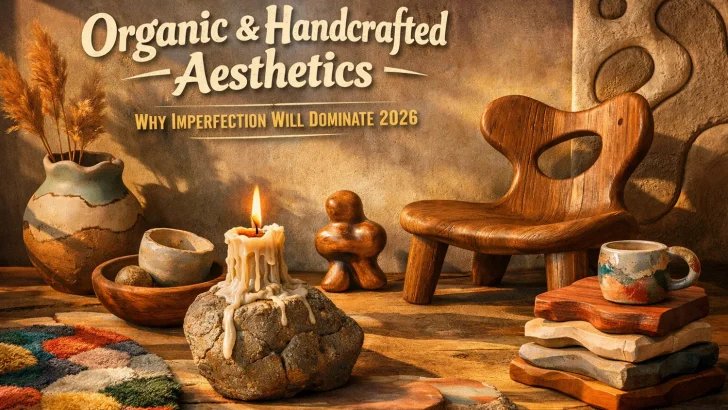
Explore why organic and handcrafted aesthetics will dominate design trends in 2026. Learn how imperfection, human touch, and authentic typography stand out in an AI-driven world.
As design becomes increasingly automated, polished, and AI-generated, a powerful counter-movement is shaping the visual landscape of 2026: organic and handcrafted aesthetics. Designers and brands are intentionally embracing imperfection—celebrating textures, irregularity, and human touch as a response to digital saturation.
In 2026, imperfection is no longer a flaw. It’s a statement.
1. The Rise of Anti-Perfect Design
For years, digital design pursued flawlessness: pixel-perfect layouts, smooth gradients, and mathematically precise typography. However, this level of perfection has started to feel sterile and emotionally distant.
Organic aesthetics push back by introducing:
-
uneven letterforms
-
hand-drawn lines and strokes
-
visible texture and grain
-
asymmetry and randomness
These elements make designs feel alive, honest, and human—qualities that audiences increasingly crave.
2. Human Touch as a Response to AI Saturation
As AI tools generate vast amounts of visual content instantly, many designs begin to look similar. This creates a new premium: authenticity.
Handcrafted visuals signal that:
-
a real person was involved
-
time and intention were invested
-
the design has a story
In branding and typography, this human signature becomes a strong differentiator in an AI-dominated market.
3. Handcrafted Typography Takes the Spotlight
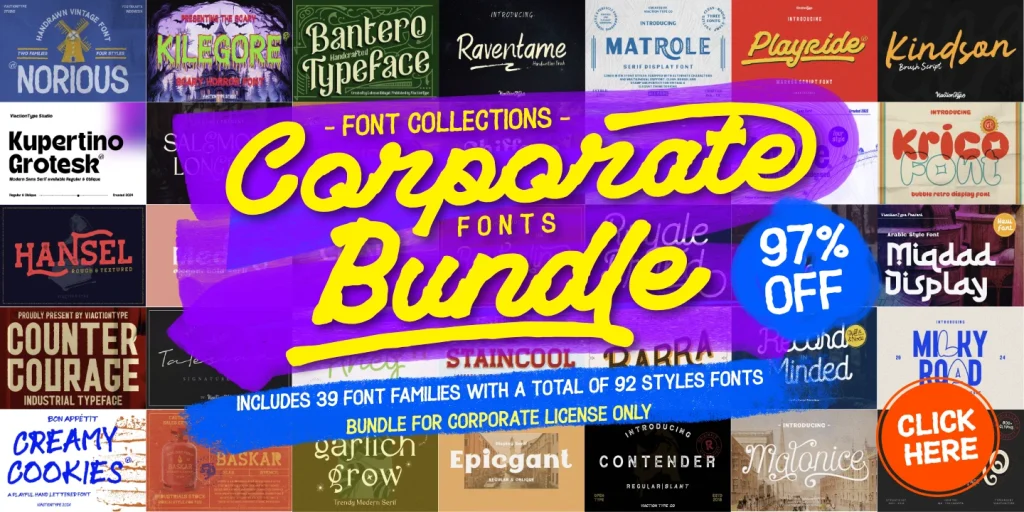
Typography plays a major role in this trend. In 2026, designers favor fonts that feel:
-
hand-lettered
-
brush-based or marker-drawn
-
imperfect in spacing and stroke
-
inspired by analog tools
These fonts add warmth and personality, making them ideal for branding, packaging, editorial layouts, and lifestyle products.
Imperfect typography feels approachable—perfect typography feels distant.
4. Texture, Grain, and Analog Influence
Organic design aesthetics extend beyond type. Visual systems in 2026 often include:
-
paper textures
-
scanned ink marks
-
photocopy noise
-
chalk, pencil, or crayon effects
-
subtle distortion
These elements add depth and tactility, bridging the gap between physical and digital experiences.
5. Emotional Connection Through Imperfection
Psychologically, imperfections create trust. When something looks too perfect, it can feel artificial or unrelatable. Organic design, on the other hand:
-
feels more personal
-
encourages emotional engagement
-
appears honest and transparent
That’s why handcrafted aesthetics perform especially well in industries like food & beverage, wellness, fashion, creative education, and independent brands.
6. Sustainability and Craft Culture Influence
The rise of organic aesthetics is also tied to cultural values. In 2026, audiences are more aware of:
-
sustainability
-
slow design
-
local craftsmanship
-
ethical production
Designs that look handmade subtly communicate these values—even without words.
7. The Future: Controlled Imperfection
Importantly, the trend isn’t about chaos. The future of organic design is intentional imperfection—a balance between structure and spontaneity.
Designers carefully curate flaws to maintain usability, readability, and brand consistency while preserving a human feel.
Conclusion: Imperfection Is the New Luxury
In 2026, organic and handcrafted aesthetics represent more than a visual trend—they reflect a cultural shift. As technology accelerates, audiences seek connection, warmth, and meaning.
Imperfection tells a story.
Human touch builds trust.
And in a world of automation, authentic design becomes the ultimate luxury